Warner & Swasey Observatory
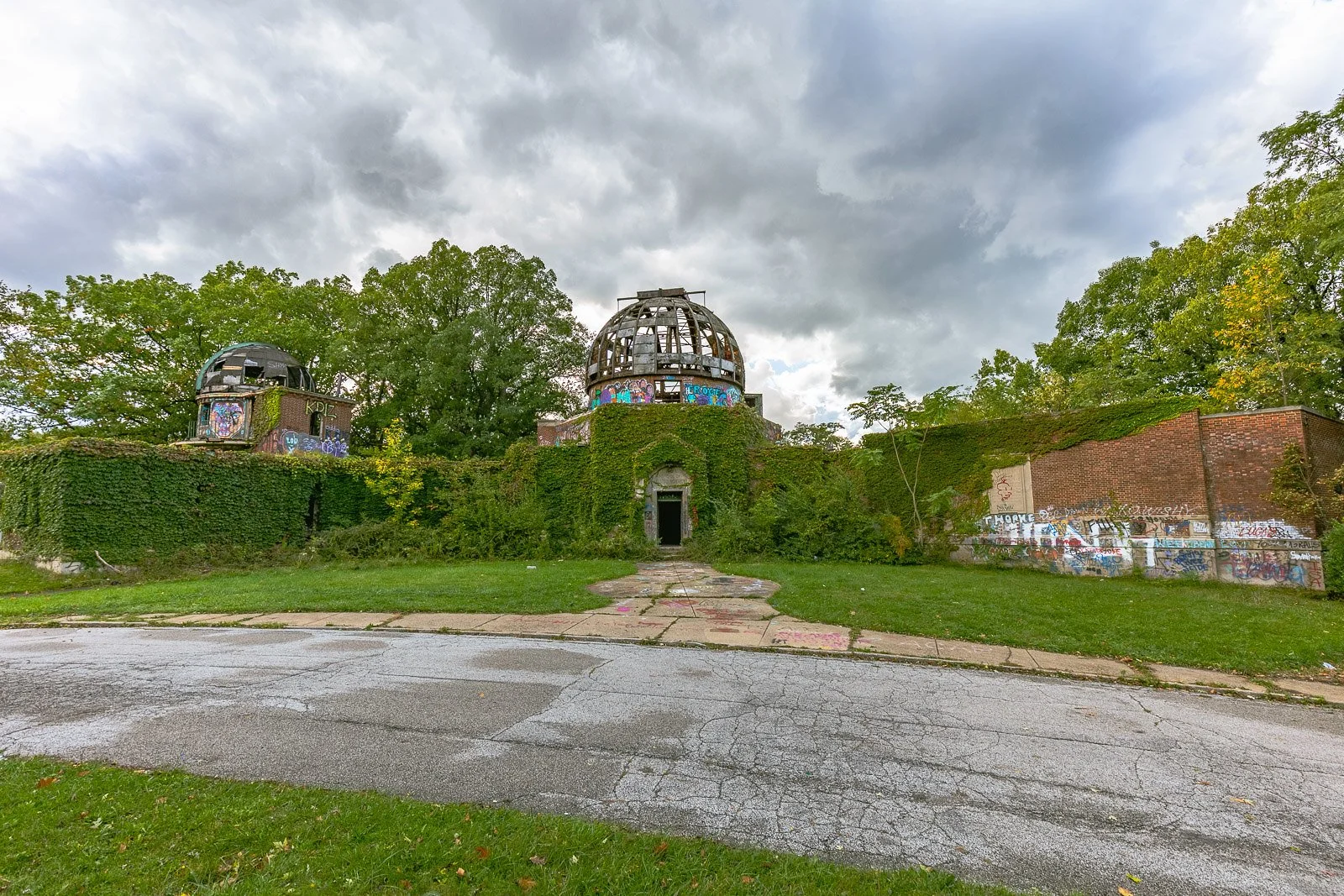
Perched on a hill along Taylor Road in East Cleveland, Ohio, the Warner & Swasey Observatory is the kind of abandoned building that immediately captures the imagination. Its distinctive domes, stone construction, and once-important role in astronomical research hint at a very different past.
Today, the former observatory stands abandoned and deteriorating. The telescopes that once occupied its domes are gone, the building has been stripped of much of its equipment, and nature has steadily reclaimed the property.
But before it became one of Cleveland's forgotten places, the Warner & Swasey Observatory was an important center for astronomy and scientific research.
The Men Behind Warner & Swasey
The story of the observatory begins with Worcester Reed Warner and Ambrose Swasey, two machinists who established what became the Warner & Swasey Company.
The pair moved their business to Cleveland in 1881, where they built a reputation for precision machine tools and astronomical instruments. Although machine tools eventually became the company's primary business, Warner's interest in astronomy led the company into the telescope business.
Warner & Swasey telescopes gained an international reputation. The company built major instruments for institutions including the Lick Observatory in California, the U.S. Naval Observatory, and the Yerkes Observatory in Wisconsin.
The company's connection to astronomy was therefore much more than a side project. Warner and Swasey were helping establish Cleveland as an important center for the manufacture of precision astronomical instruments.
The Warner & Swasey Observatory
Warner and Swasey eventually became trustees of the Case School of Applied Science. In 1919, they donated their observatory and its equipment to the school.
A new observatory building was constructed on Taylor Road in East Cleveland and formally dedicated in 1920. The building was designed by the Cleveland architectural firm Walker & Weeks.
The original observatory housed a 9.5-inch refracting telescope. That telescope had an interesting history of its own: it had originally been built by Warner & Swasey for their personal use before becoming part of the Case observatory.
Over the following decades, the observatory expanded.
A much larger addition was completed in the early 1940s, providing space for a powerful new telescope, along with additional facilities for astronomy and education. The observatory eventually included an astronomical library and a public lecture hall.
For a time, this was a place where astronomers studied the night sky from the middle of the Cleveland area.
The Burrell Schmidt Telescope
One of the most important instruments associated with the observatory was the 24-inch Burrell Schmidt telescope.
Built in 1939 by Warner & Swasey, the telescope was installed at the East Cleveland observatory and became an important research instrument. Its Schmidt design gave astronomers a wide field of view, making it particularly useful for astronomical surveys.
The telescope eventually became a victim of one of the problems that would help make the original observatory obsolete: Cleveland's growing light pollution.
As the city and surrounding suburbs expanded, artificial light increasingly interfered with astronomical observations. The dark skies that astronomers needed were becoming increasingly difficult to find in East Cleveland.
In the 1950s, Case established a new observing station in Geauga County, farther away from Cleveland's lights. The Burrell Schmidt telescope was eventually moved there.
Ironically, the growth of Cleveland itself helped make one of its most interesting scientific landmarks obsolete.
From Scientific Center to Abandoned Building
Moving the telescopes did not immediately mean the end of the Taylor Road observatory.
A 36-inch telescope was eventually installed at the East Cleveland facility, but by the late 1970s the observatory's role had changed significantly.
In 1978, Case Western Reserve University's astronomy department arranged for the Burrell Schmidt telescope to be moved to Kitt Peak National Observatory in Arizona. It was relocated in 1979.
The 36-inch telescope was moved from Taylor Road to the Nassau Station in 1980, and the astronomy department's faculty and resources were subsequently moved to the university's main campus.
The Taylor Road facility was sold in 1983.
After that, the former observatory entered a much different chapter of its history.
The Abandoned Warner & Swasey Observatory
Once the astronomers and telescopes were gone, the building gradually fell into disrepair.
There were attempts to give the old observatory a new purpose. In the mid-2000s, new owners planned to convert the building into a private residence, but those plans ultimately stalled.
Without a viable new use, the building continued to deteriorate.
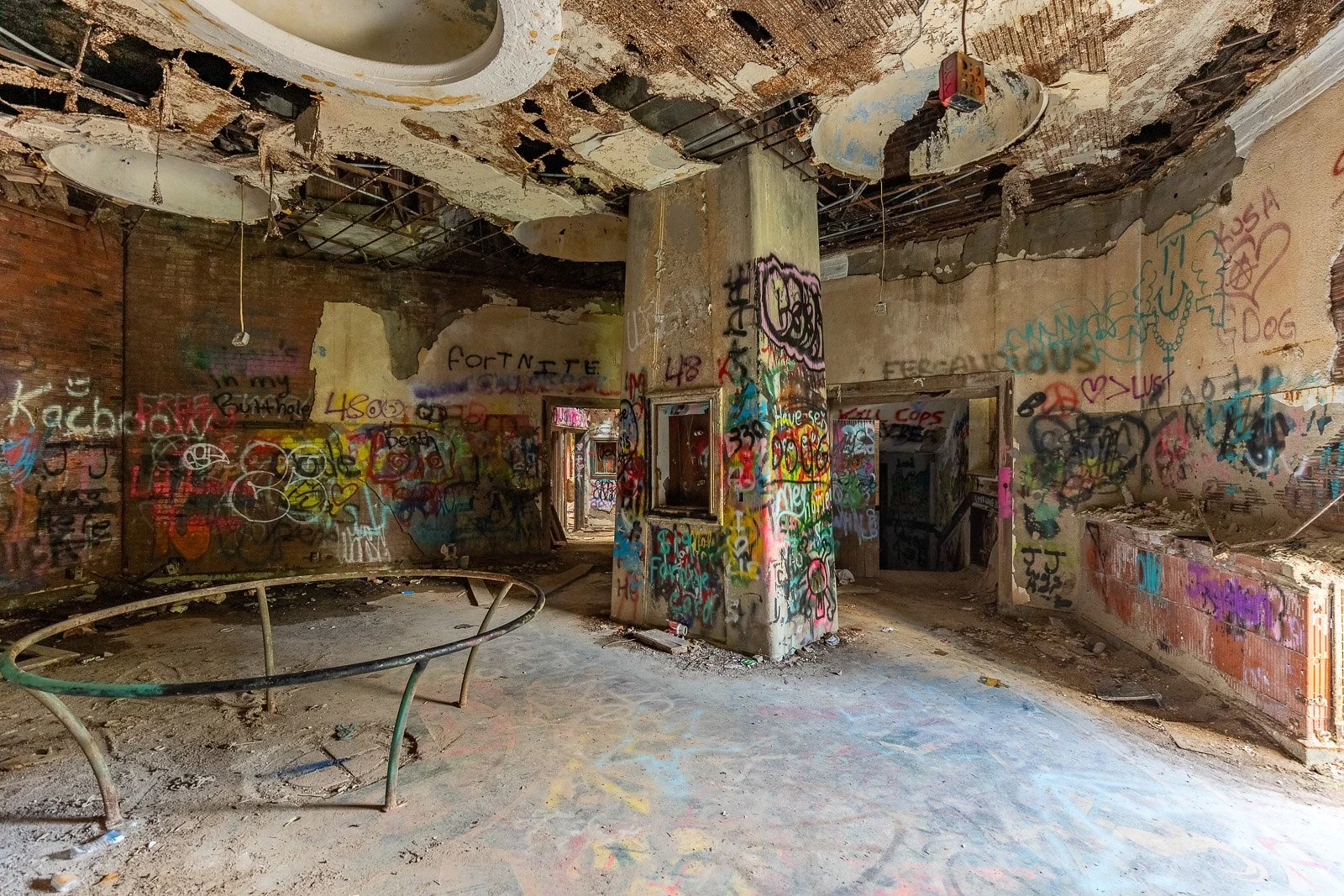
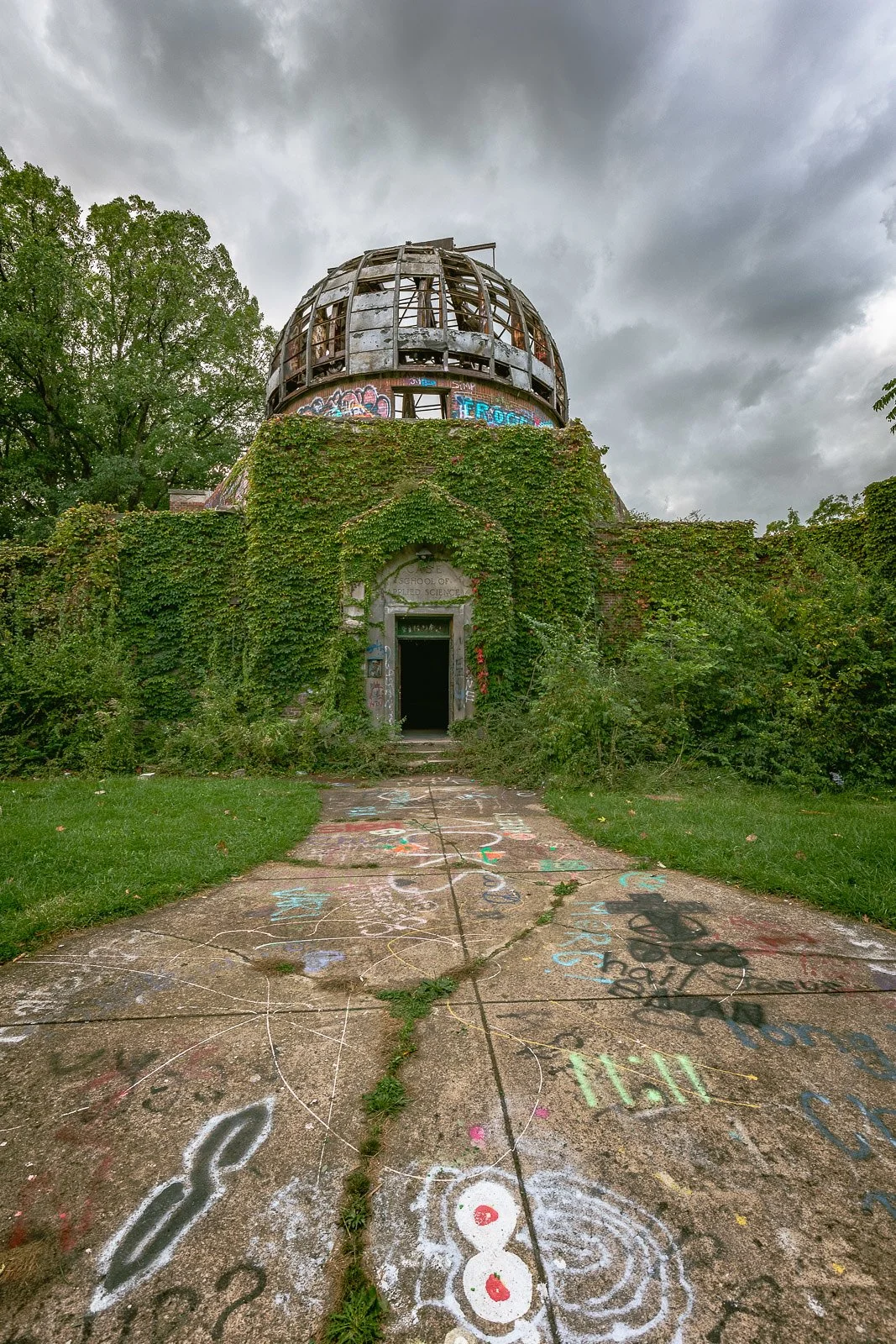
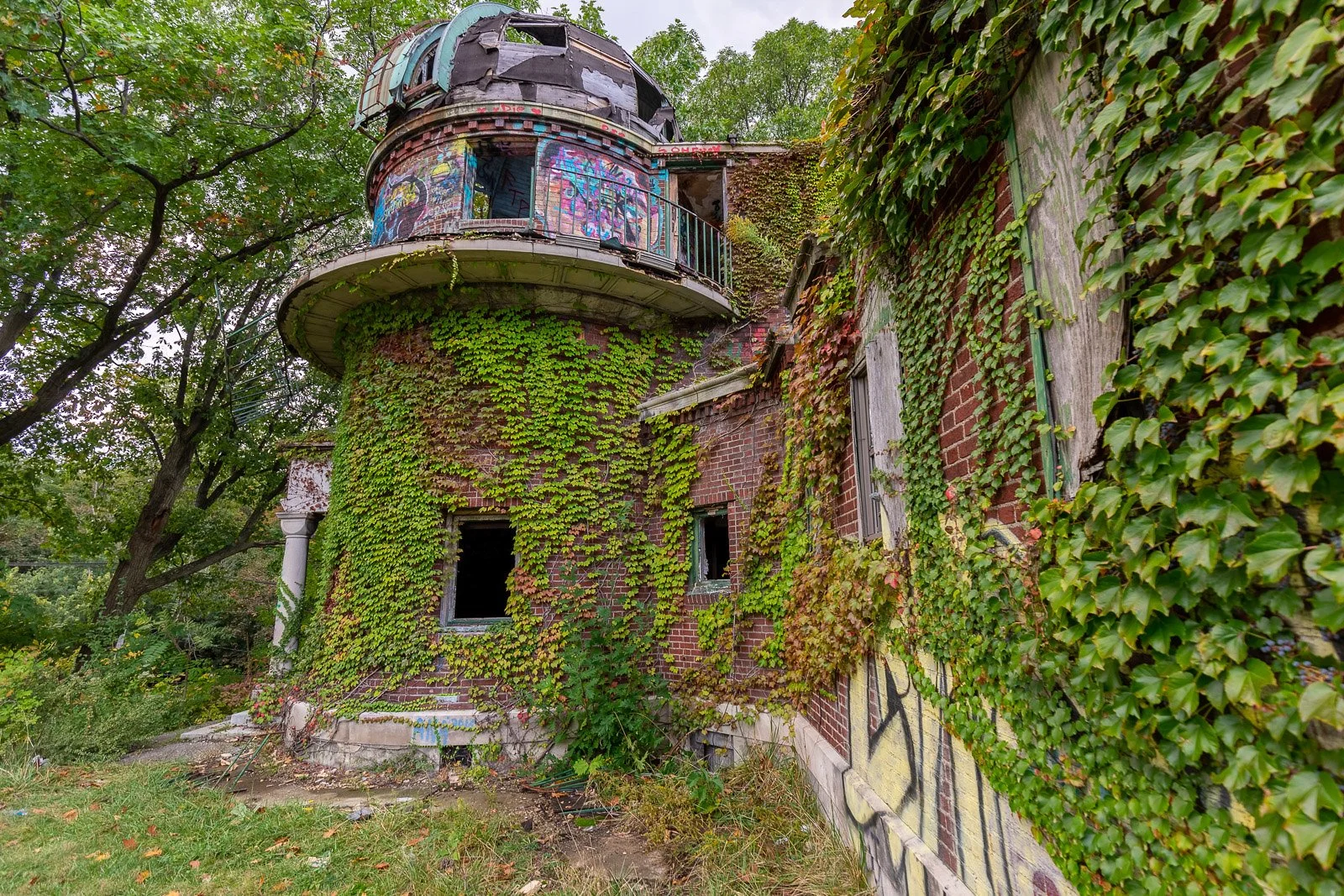
Over the years, the observatory became increasingly recognizable as an abandoned Cleveland landmark. Its domes, once associated with scientific discovery, became empty shells. Metal was stripped from portions of the structure, windows were broken, and vegetation began taking over areas around the building.
Photographs of the abandoned observatory show just how dramatically its appearance has changed.
The contrast is striking: a building that was once filled with astronomers, students, lectures and sophisticated scientific instruments became a silent and deteriorating reminder of Cleveland's scientific past.
What Happened to the Telescopes?
One of the more interesting aspects of the Warner & Swasey Observatory story is that the telescopes did not simply disappear along with the building.
The original 9.5-inch refractor survived and was eventually installed on the roof of Case Western Reserve University's A.W. Smith Building. It remains in use for students, faculty and public observing events.
The Burrell Schmidt telescope also survived.
After leaving Ohio, it was installed at Kitt Peak National Observatory in Arizona, where it continues to have a role in astronomical research. Observations made with the telescope have contributed to astronomical discoveries, including the identification of the galaxy Andromeda VIII.
In other words, the instruments escaped the fate of the building.
The science continued. The building did not.
A Forgotten Piece of Cleveland History
The Warner & Swasey Observatory is interesting because its history represents several different parts of Cleveland's past.
It connects the city to the history of American manufacturing and precision engineering. It reflects Cleveland's role in the development of astronomical instruments. It was part of the growth of Case School of Applied Science and, later, Case Western Reserve University.
And ultimately, it represents the unintended consequences of urban growth.
The same city that helped Warner & Swasey become a world-renowned manufacturer also became too bright for one of its astronomical facilities.
Today, the abandoned observatory is a physical reminder of that transition.
Its empty domes no longer point toward the stars. Instead, they stand as remnants of a building that once represented Cleveland's ambitions in science and technology.
The Legacy of the Warner & Swasey Observatory
The abandoned Warner & Swasey Observatory is a remarkable example of how quickly the purpose of a building can disappear while its history remains.
The astronomers moved on. The telescopes moved on. The research moved on.
The building stayed behind.
Today, the former observatory stands as one of the more unusual abandoned landmarks in the Cleveland area. Its history stretches from the early days of Warner & Swasey's telescope manufacturing through decades of astronomical research and finally into the long period of abandonment that followed.
For anyone interested in abandoned places in Cleveland, Ohio history, architecture, or photography, the Warner & Swasey Observatory is a fascinating reminder that some abandoned buildings have stories that reach far beyond their walls.
And in this case, that story quite literally reaches for the stars.
Photos of the Warner & Swasey Observatory