
Paris Catacombs
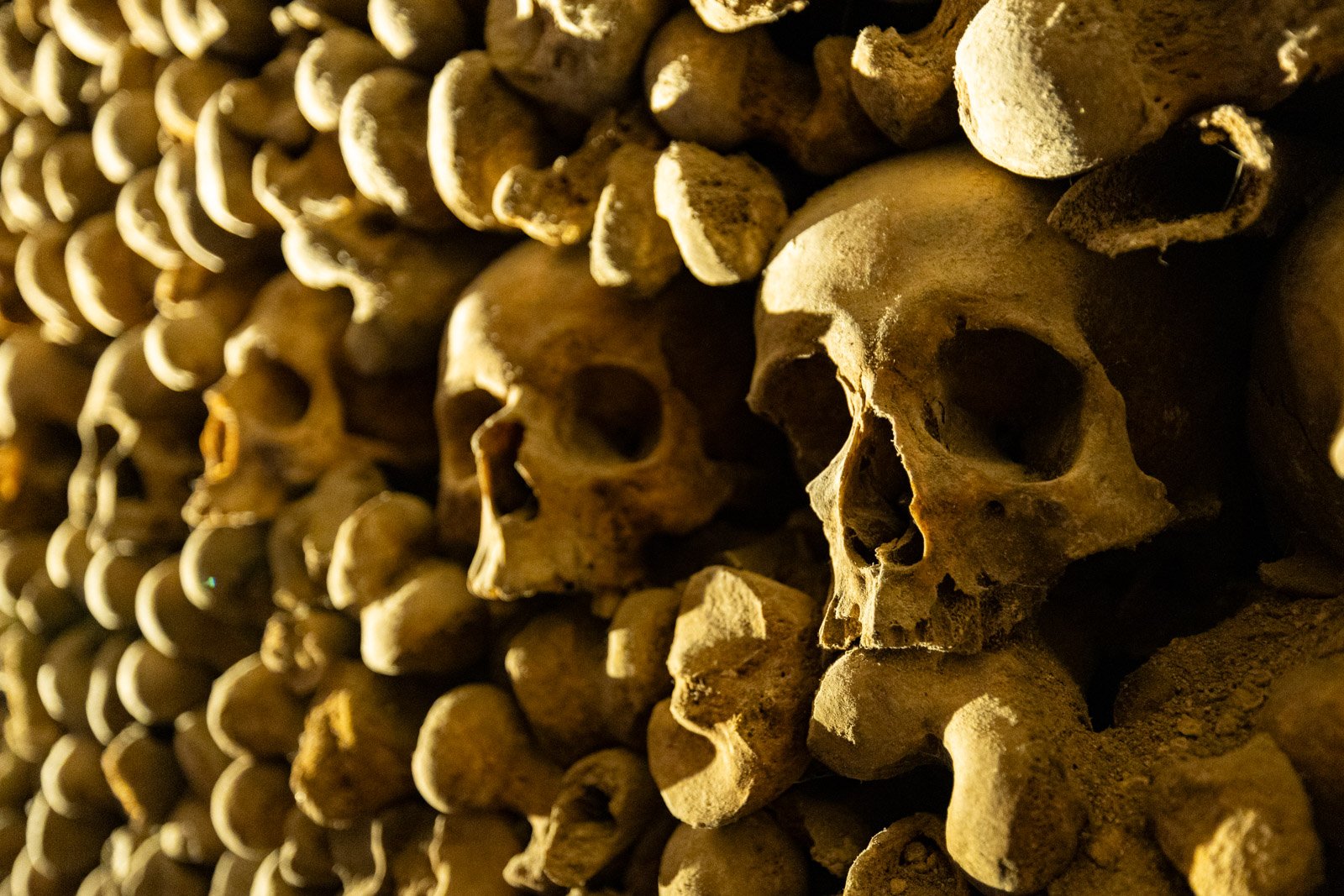
Most people who come to Paris spend their days looking up, at iron lattice, zinc roofs and cathedral spires. Twenty metres below the 14th arrondissement the city keeps something else: the bones of roughly six million people, stacked along the galleries of an old limestone quarry. The Paris Catacombs are the only part of that underworld open to the public, and they have been drawing visitors for more than two centuries.
The name is a borrowing. These tunnels were never dug for burials, and the original catacombs are in Rome. Paris reached for the word once its dead had nowhere else to go.
How Did Six Million Skeletons End Up Under Paris?
For centuries, quarrymen cut limestone from beneath the edge of the city, and that stone went into the Louvre, Notre-Dame and Les Invalides. By the 1700s Paris had spread out over the empty workings, and the dead were running out of room above ground. The Saints-Innocents cemetery alone had taken in about two million burials over 600 years. By the 1780s the crowding had turned into a health problem the city could no longer ignore.
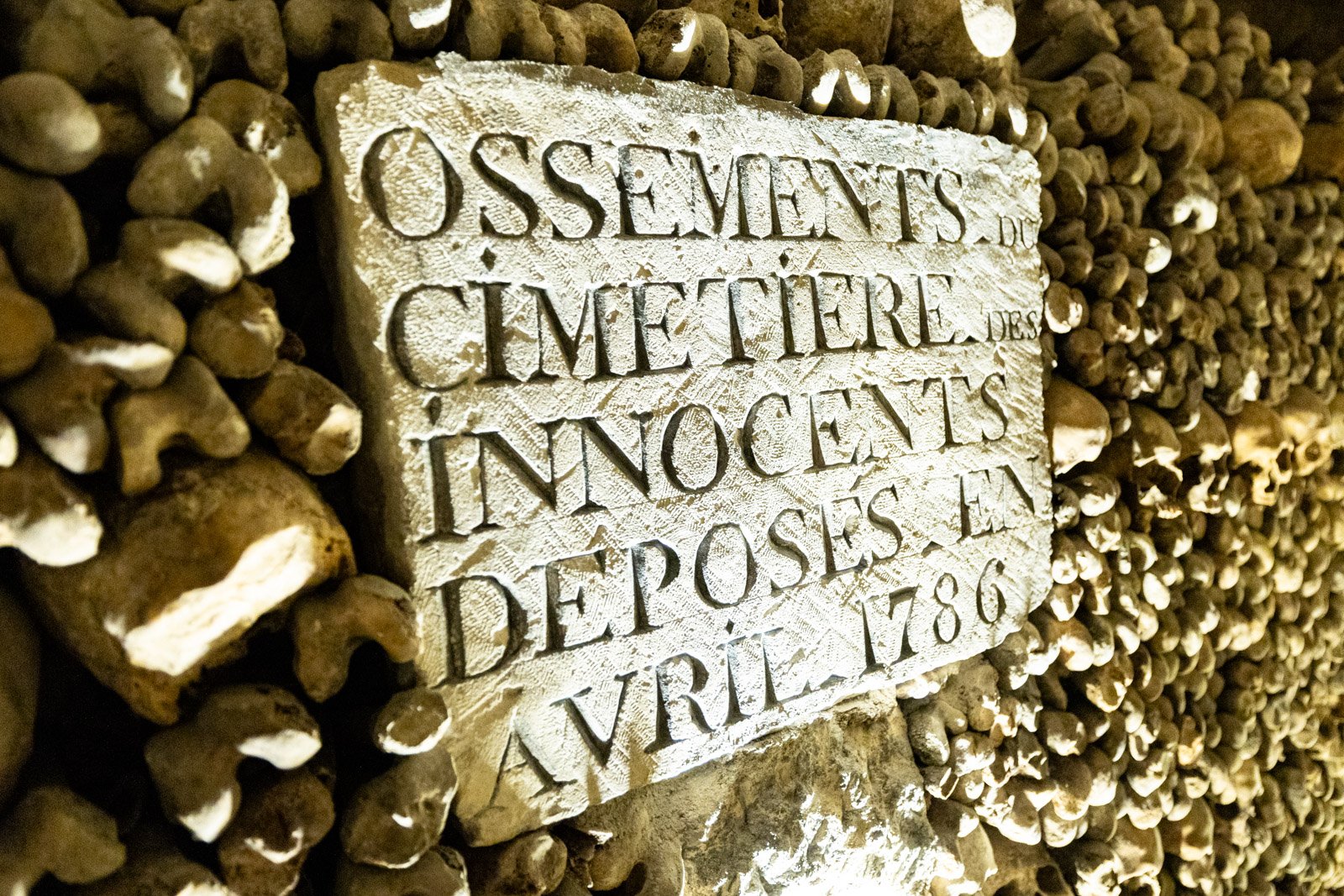
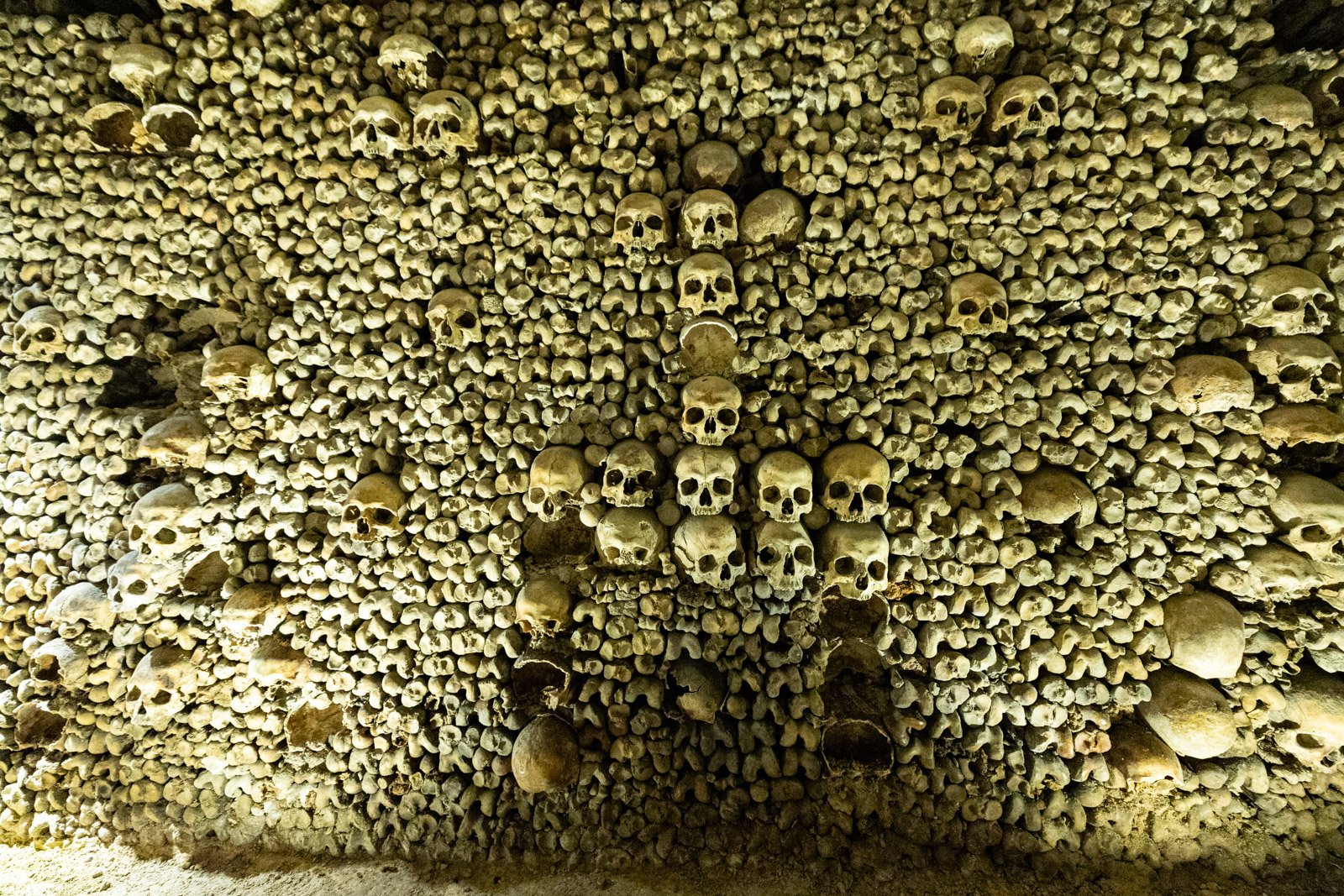
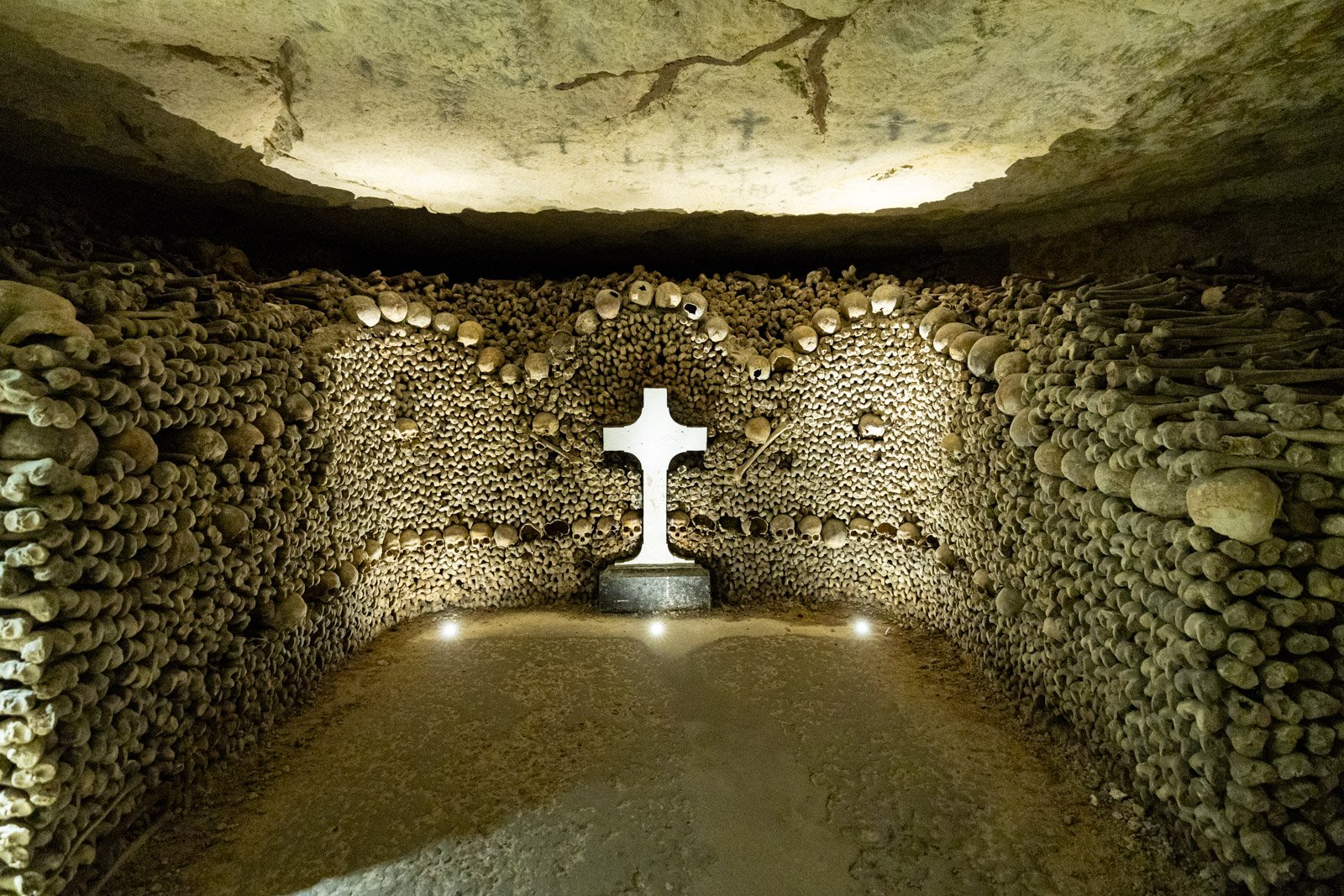
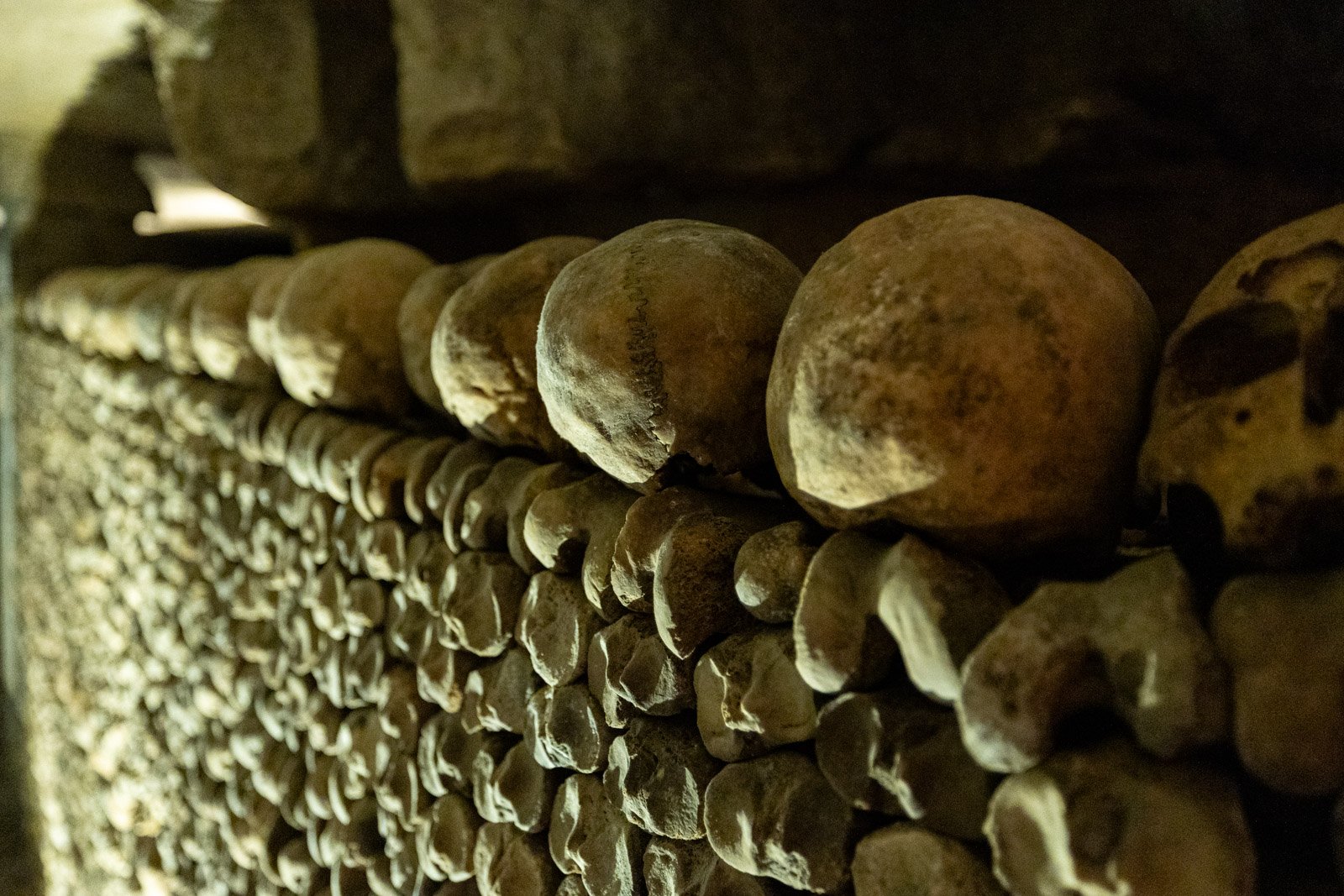
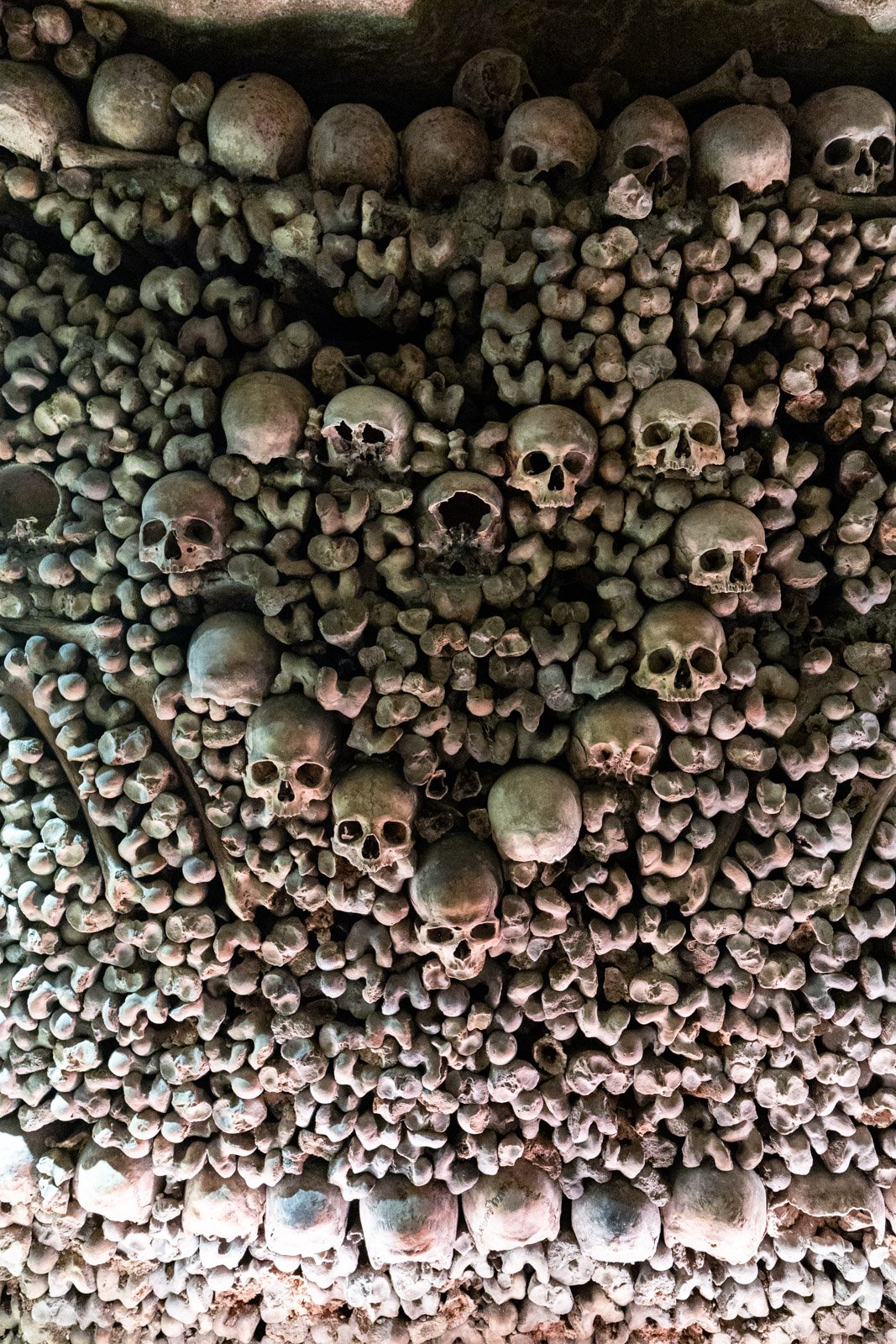
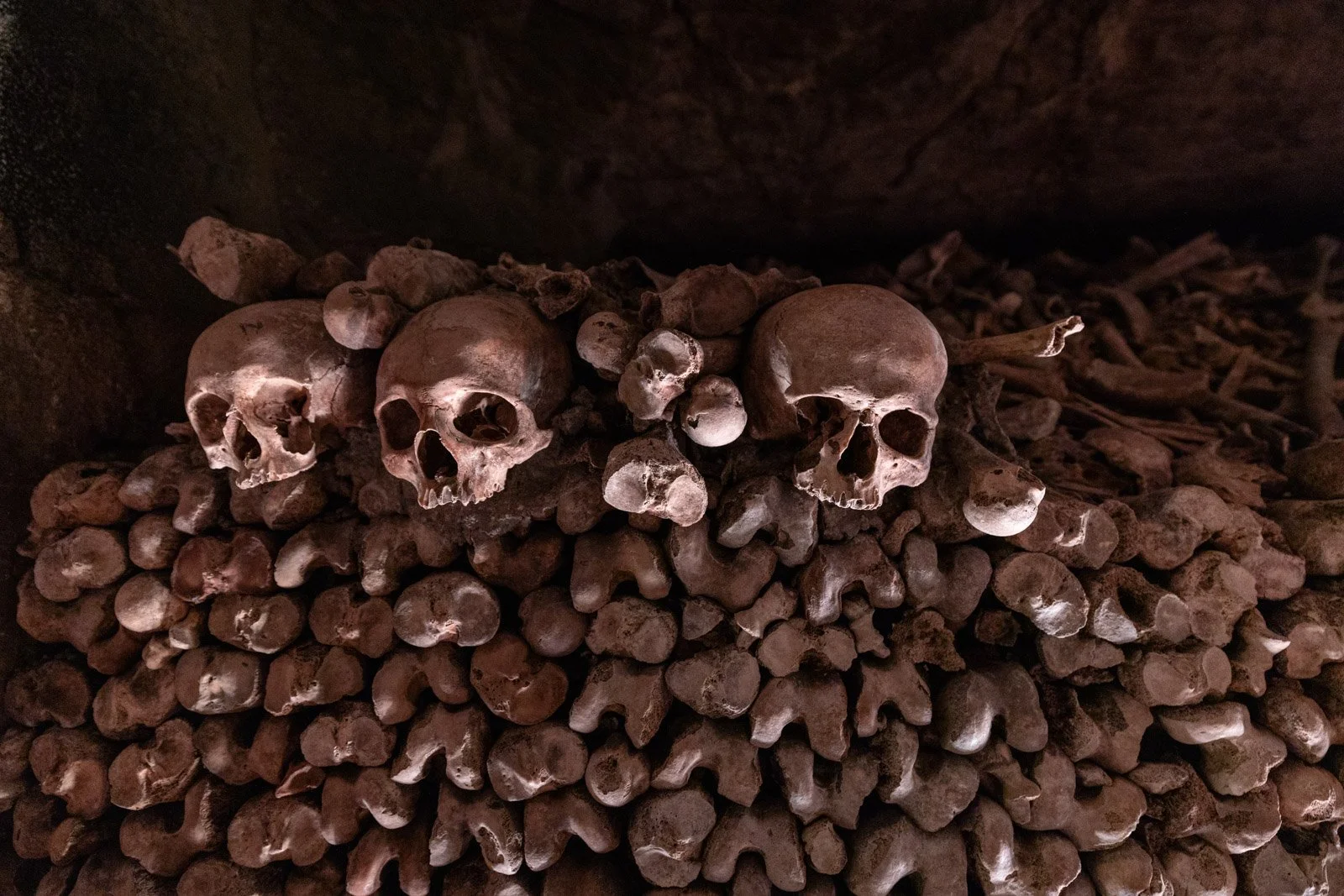
The solution was to move them. The quarries were consecrated as the Paris Municipal Ossuary on 7 April 1786, and the transfers went on for about twelve years. At first the bones were simply heaped. Around 1810 the inspector Louis-Étienne Héricart de Thury began arranging them into walls of skulls and thigh bones, and added inscriptions and a small mineral collection. Visitors were already coming by then. The ossuary opened by appointment in 1809, and Napoleon III brought his young son down in 1860.
Inside the Paris Catacombs
The descent begins with a spiral staircase and a long walk through narrow, damp galleries. Then comes a doorway with a warning in French, Arrête! C'est ici l'empire de la Mort. Stop, this is the empire of Death.
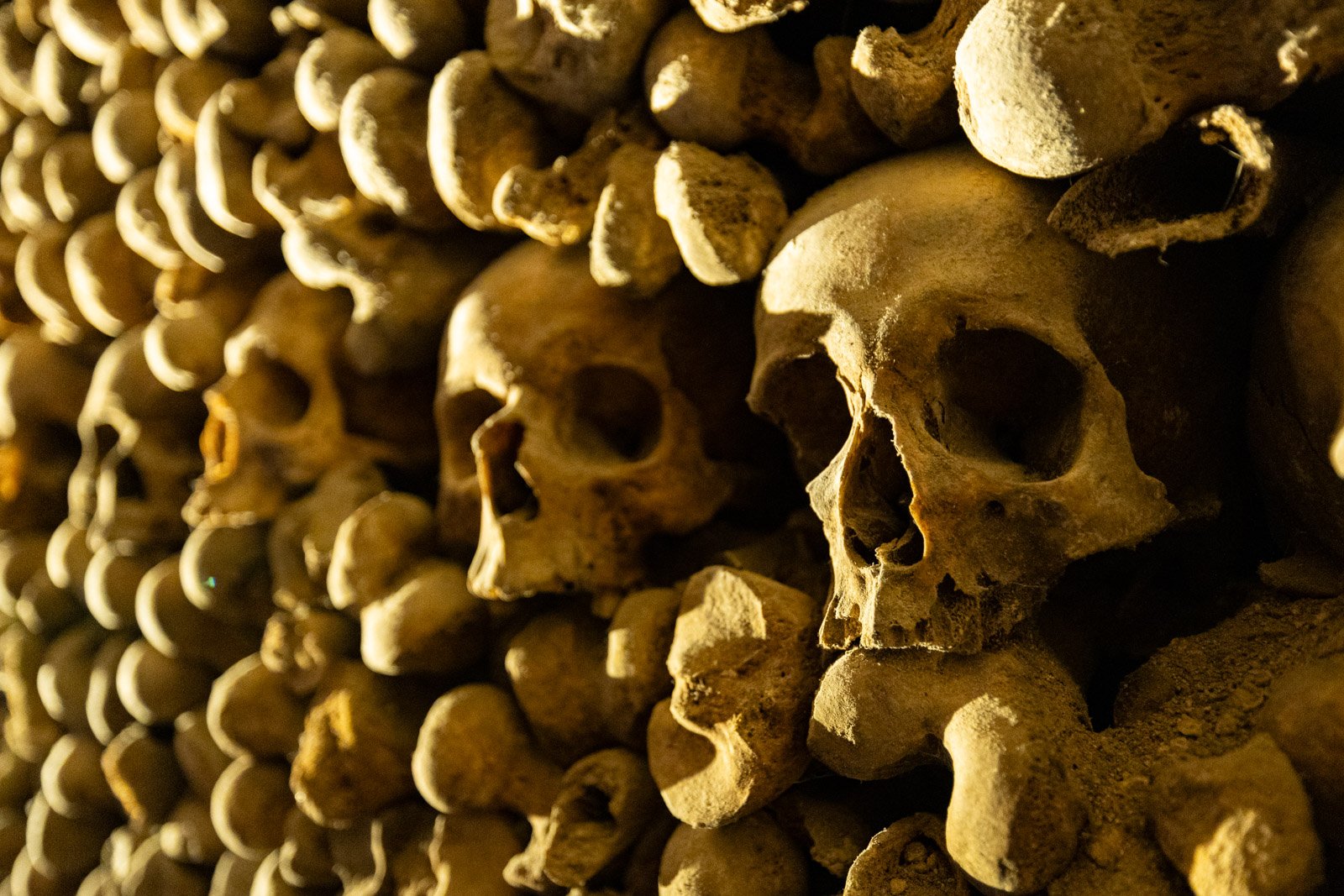
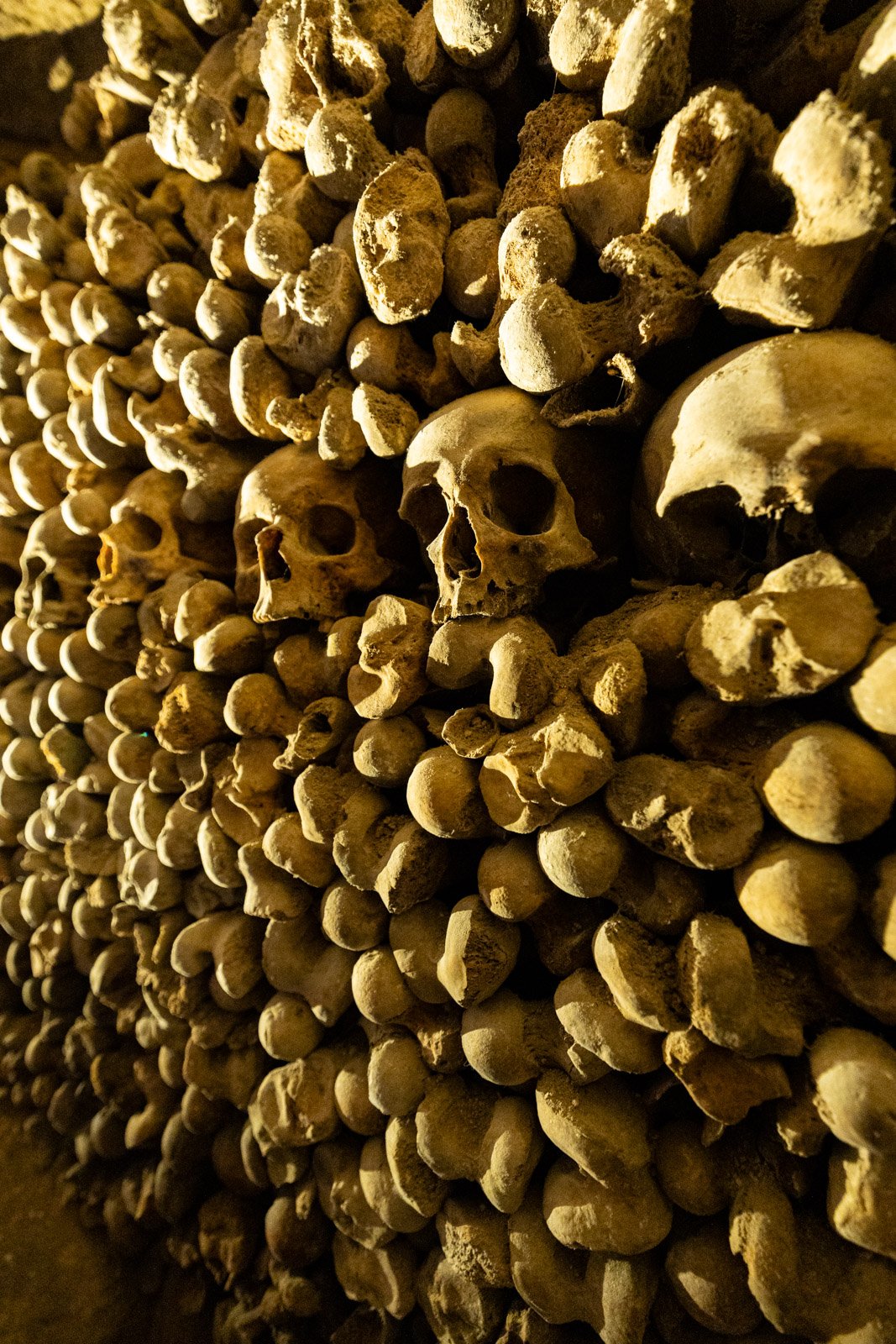
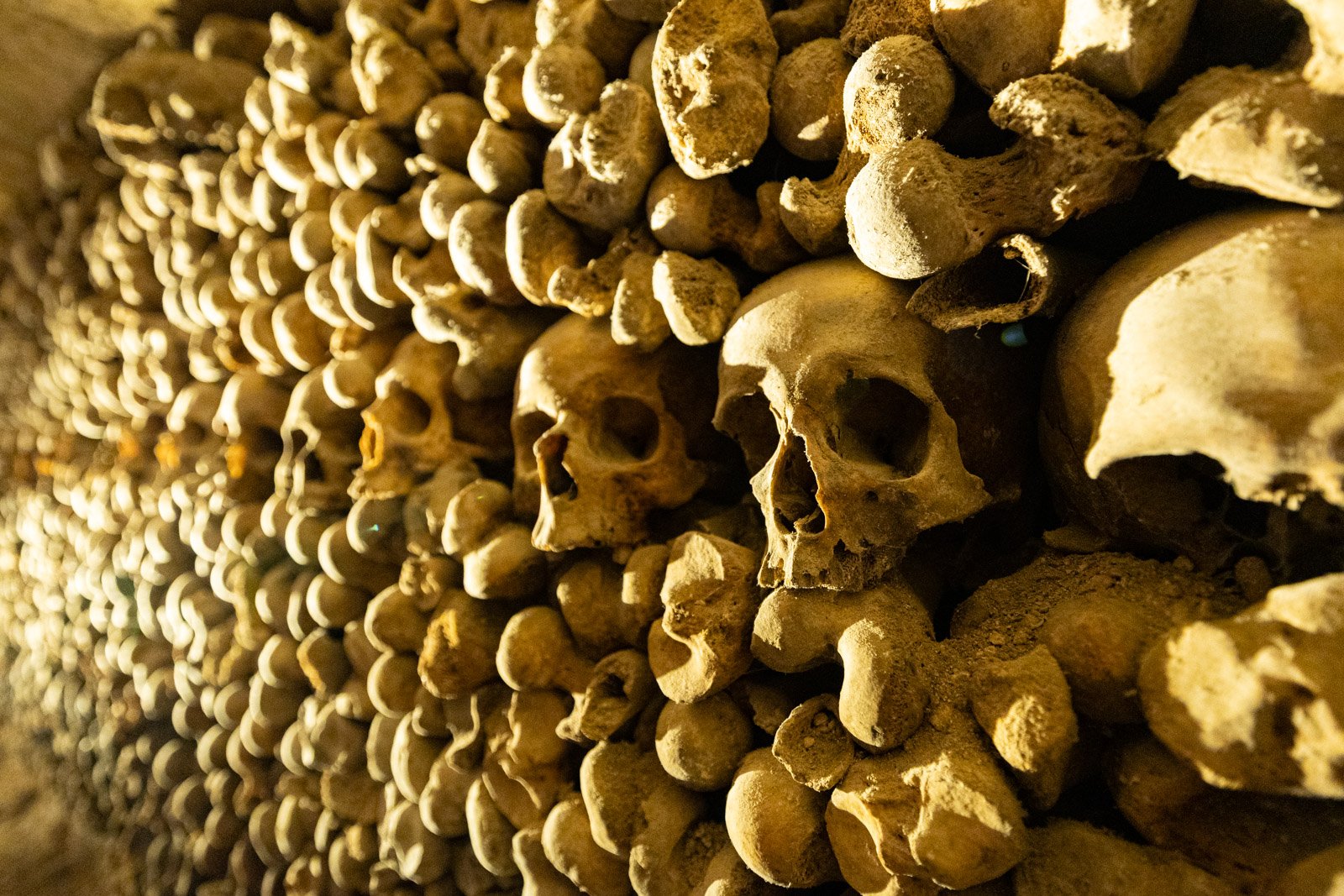
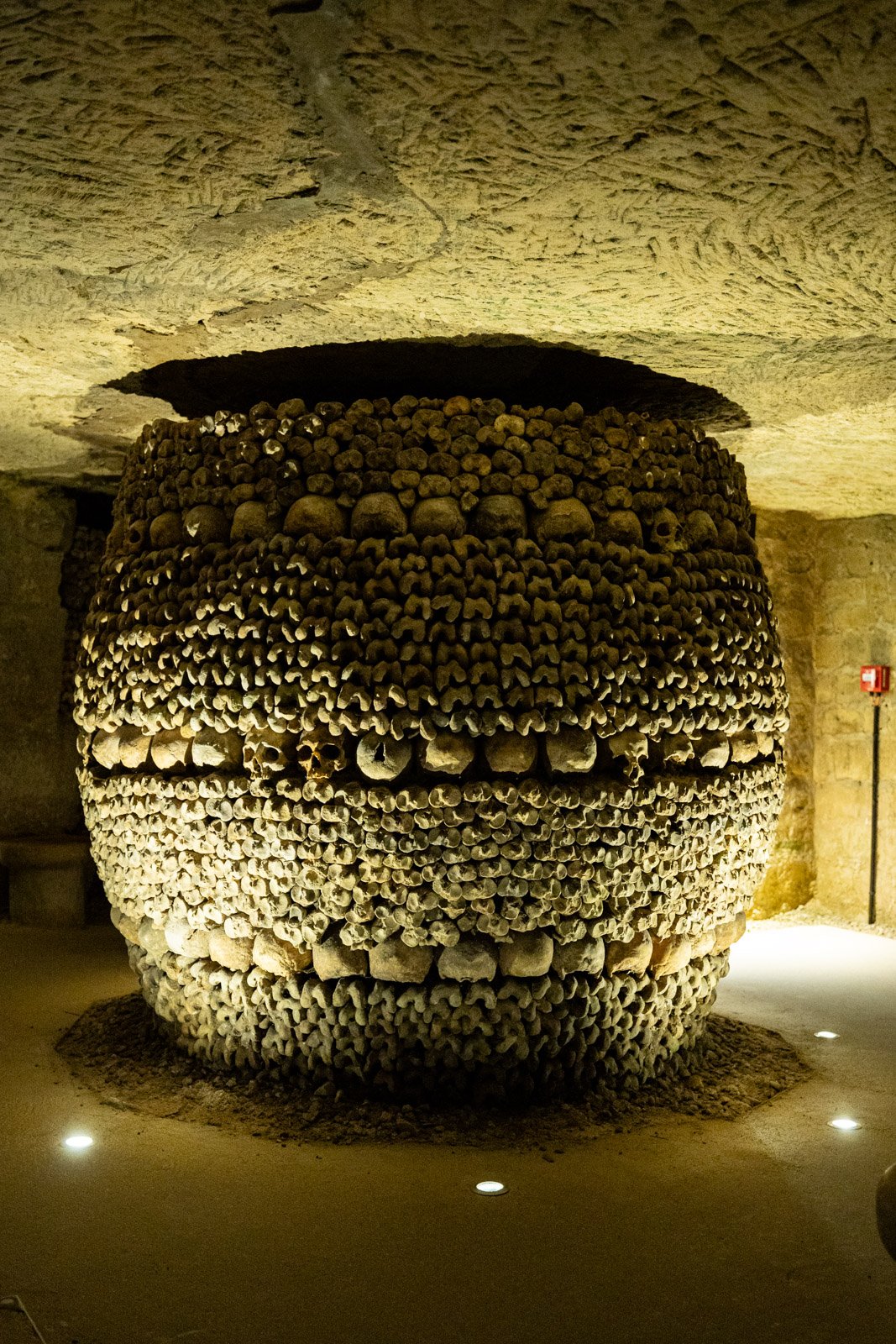
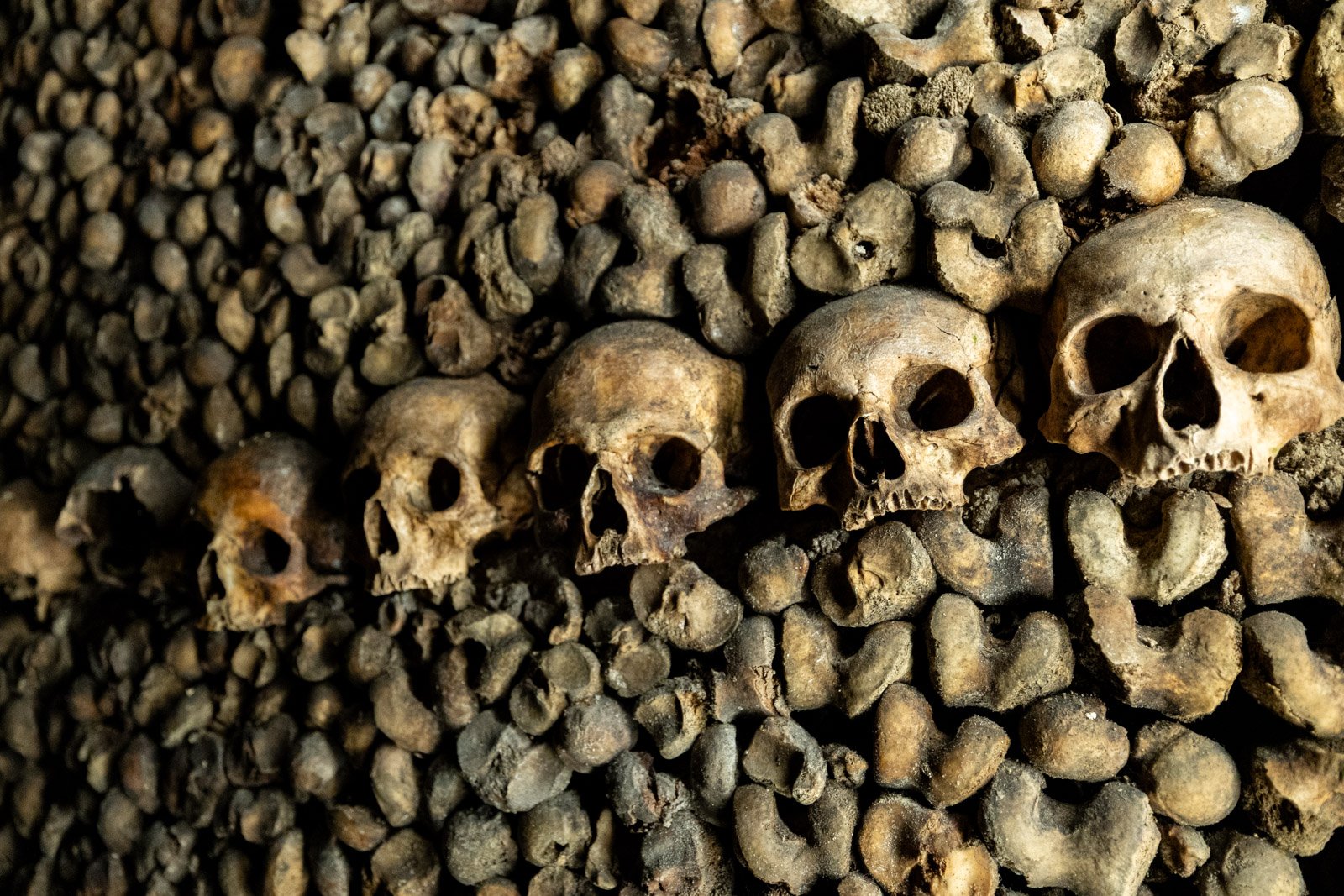
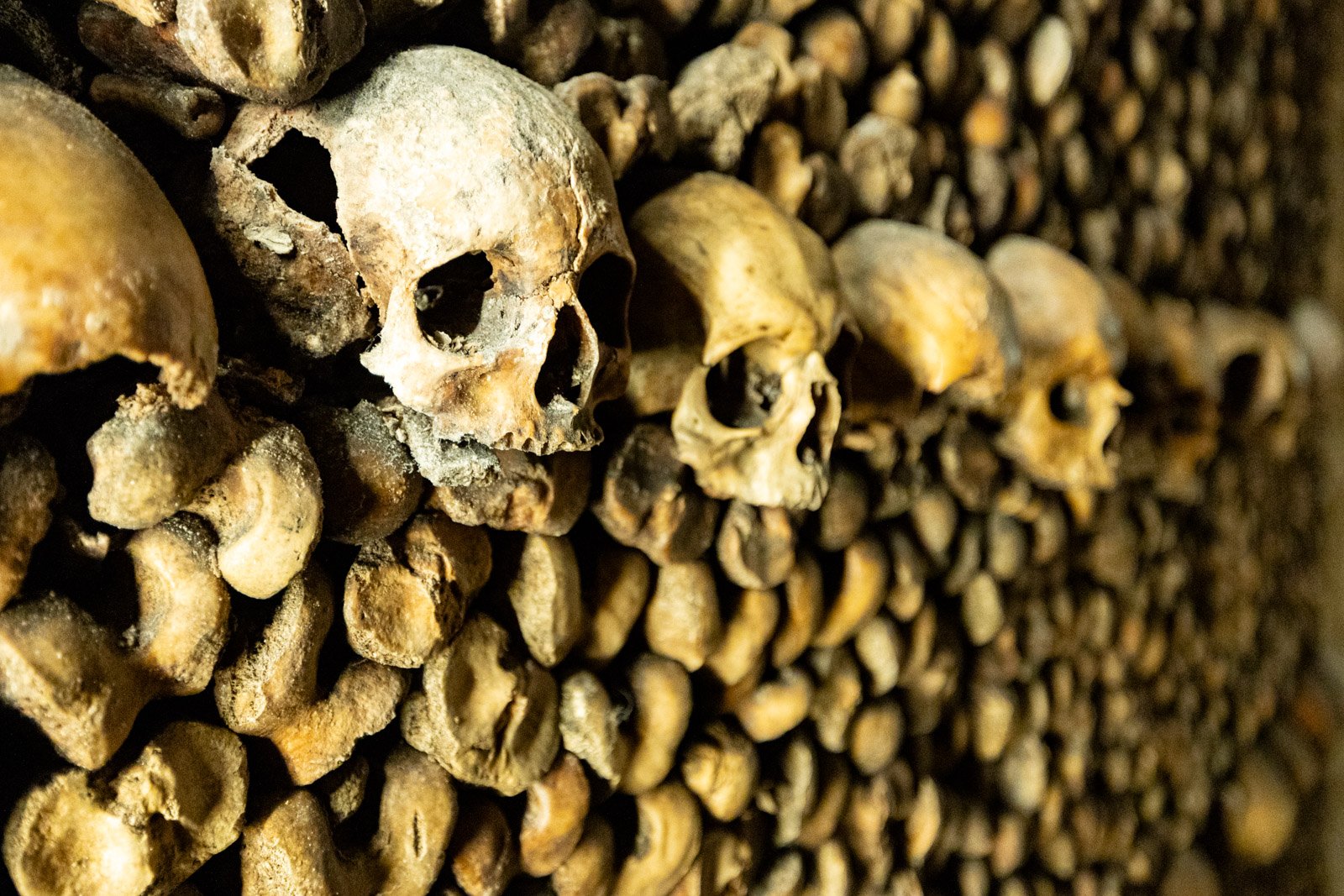
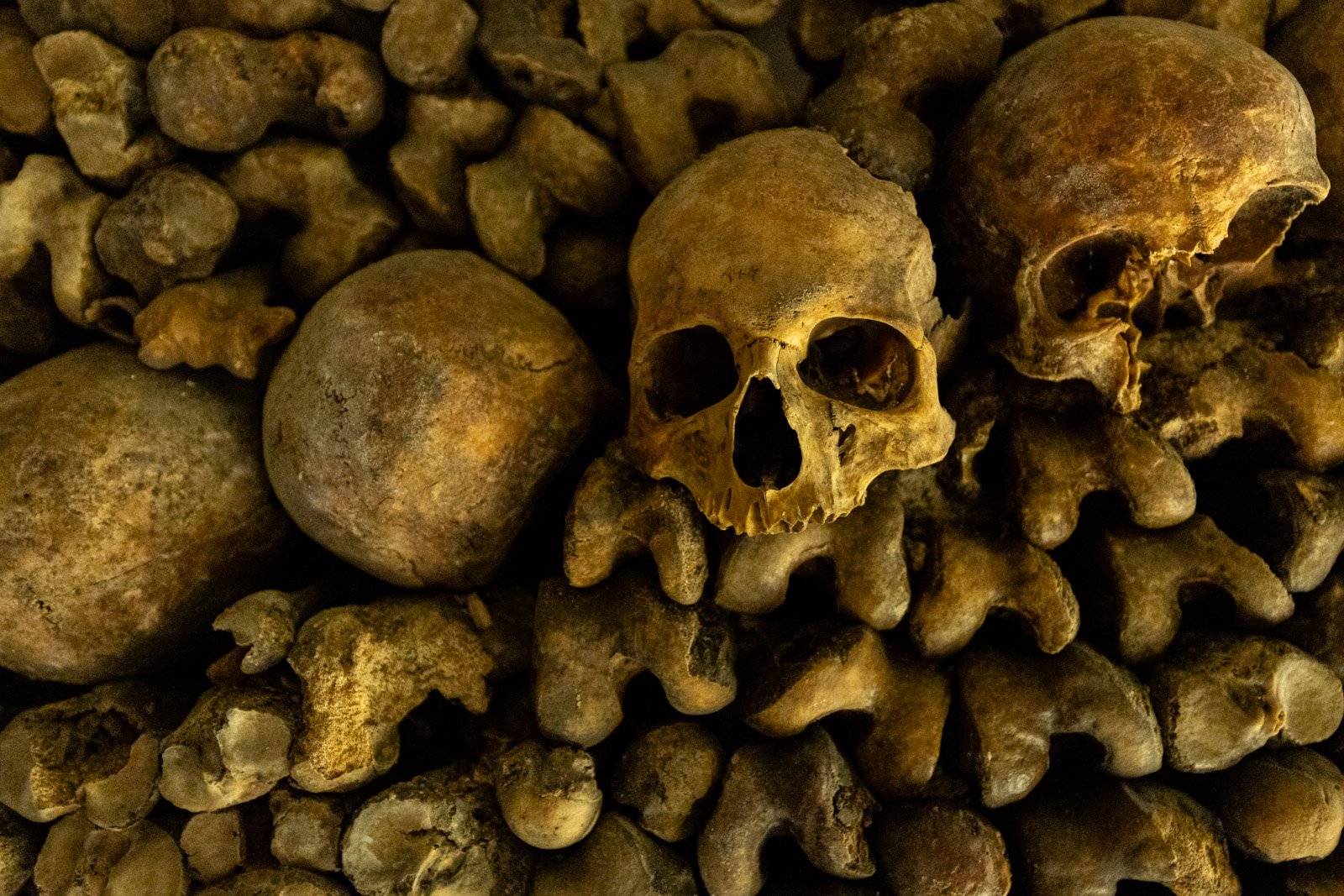
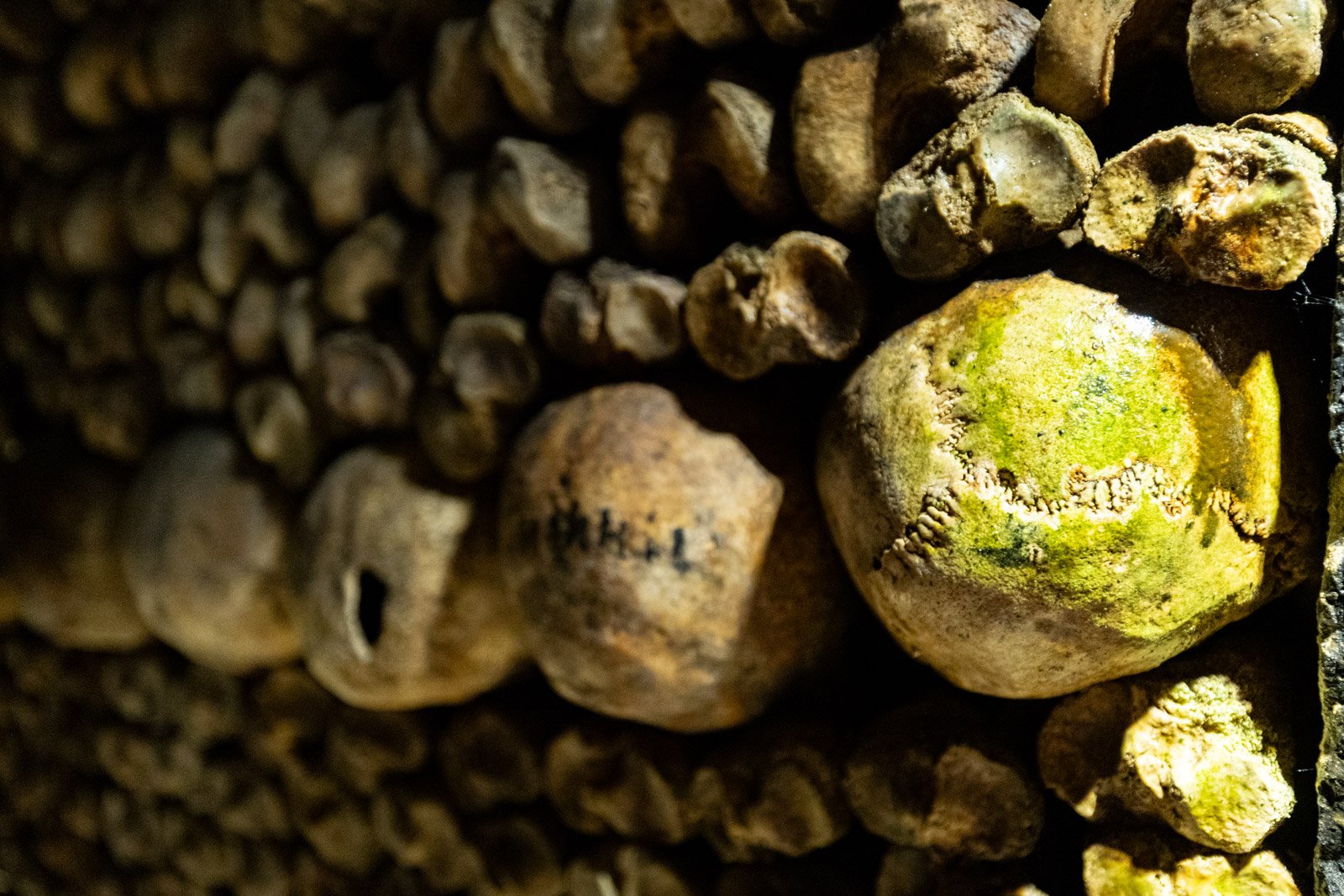
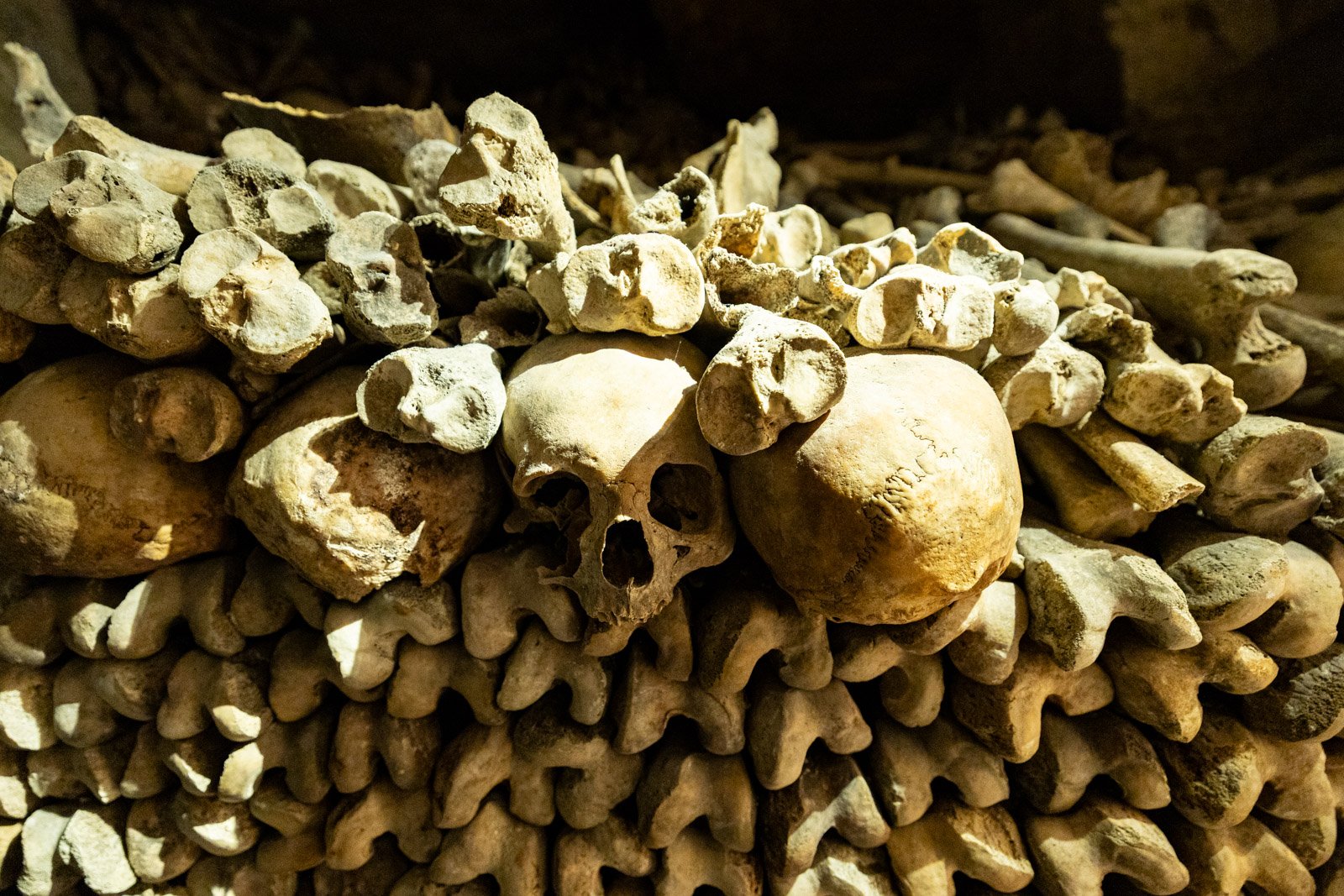
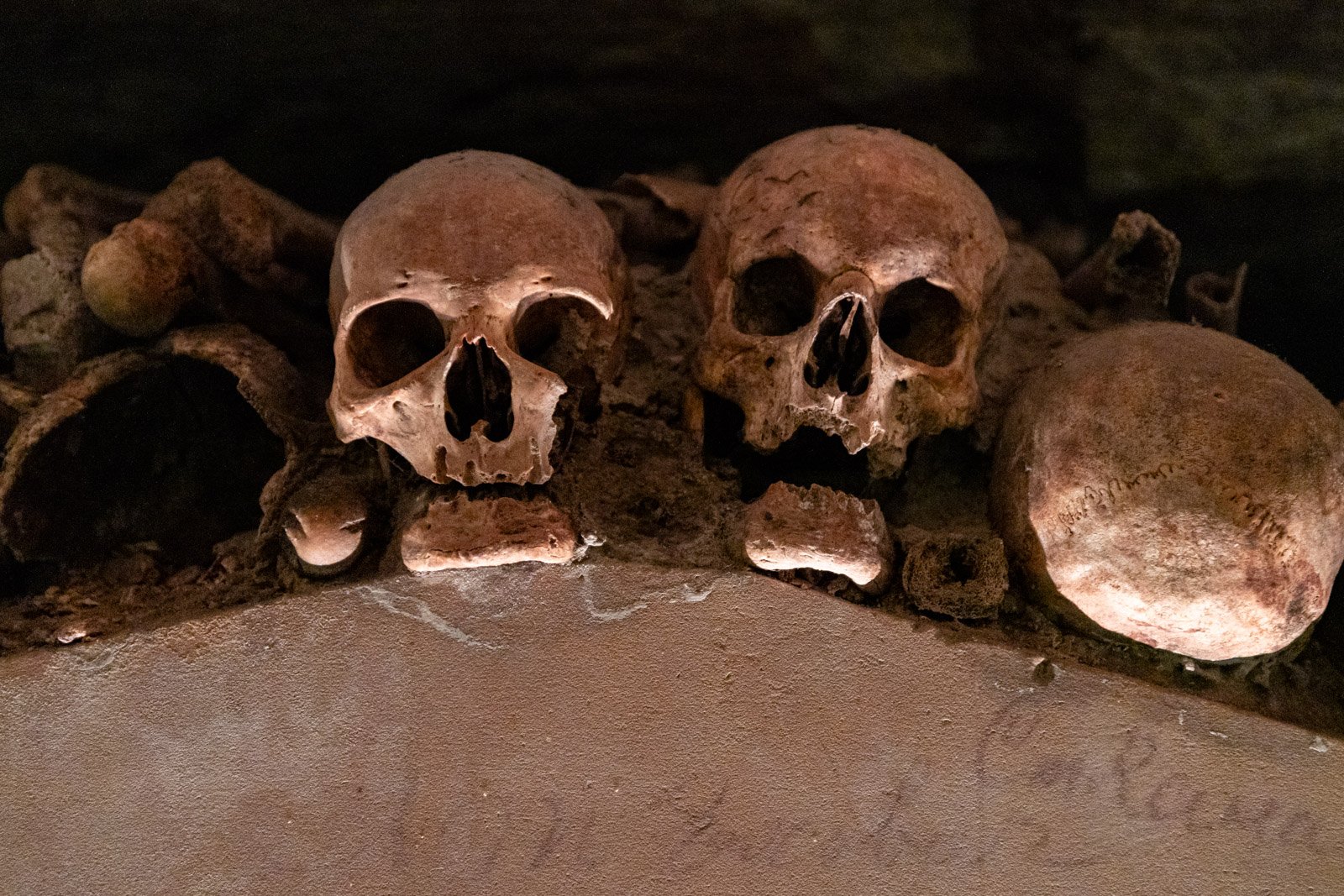
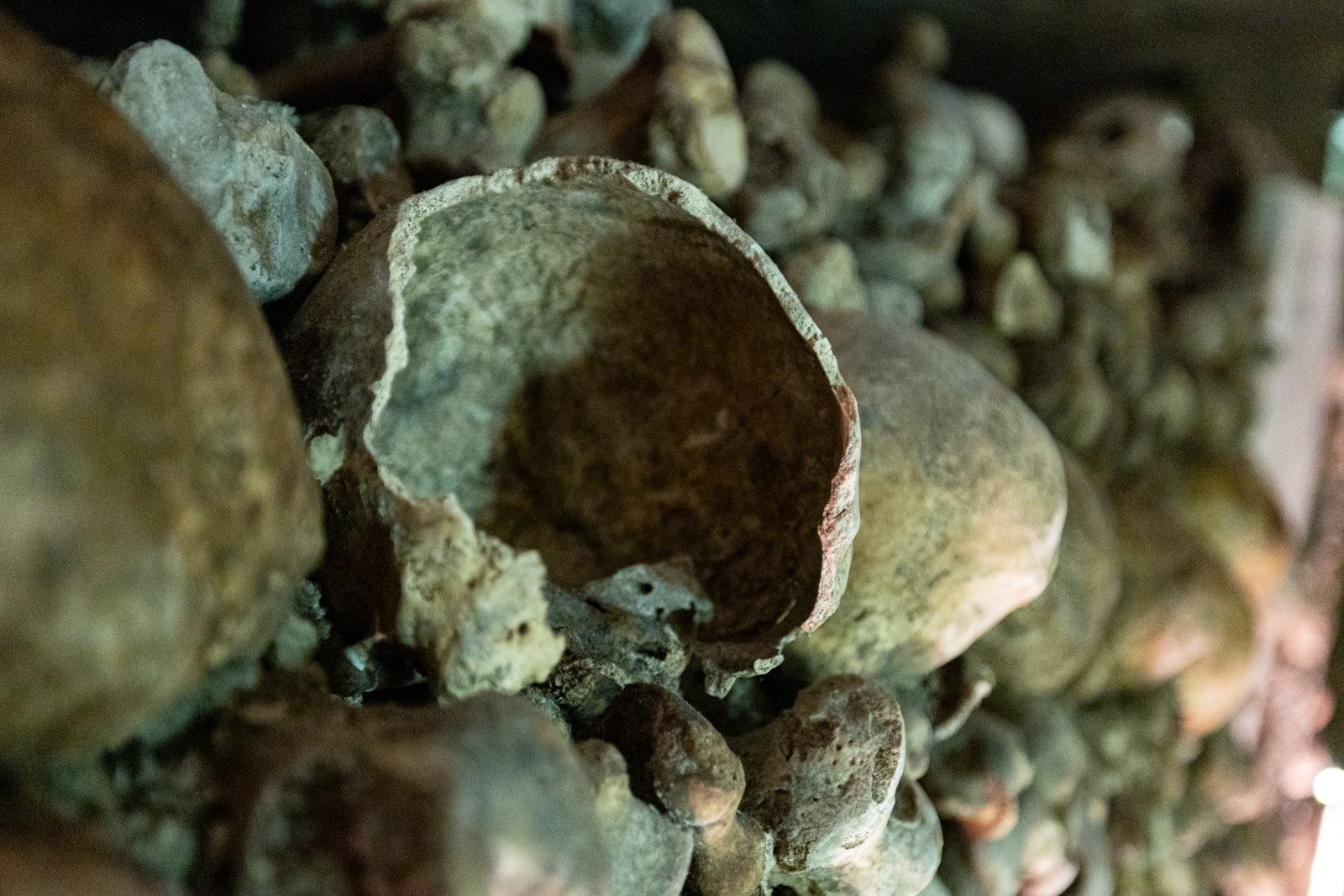
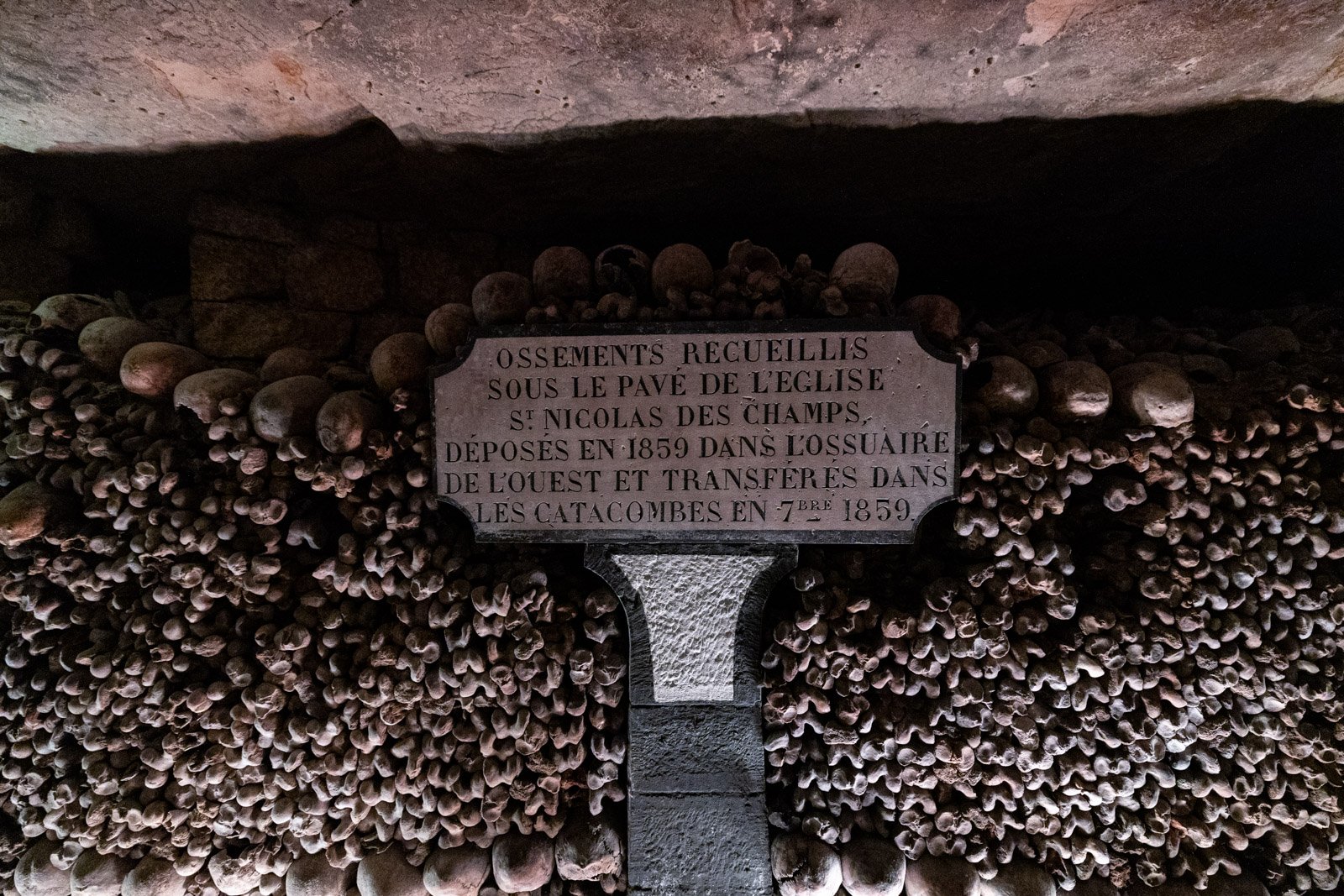
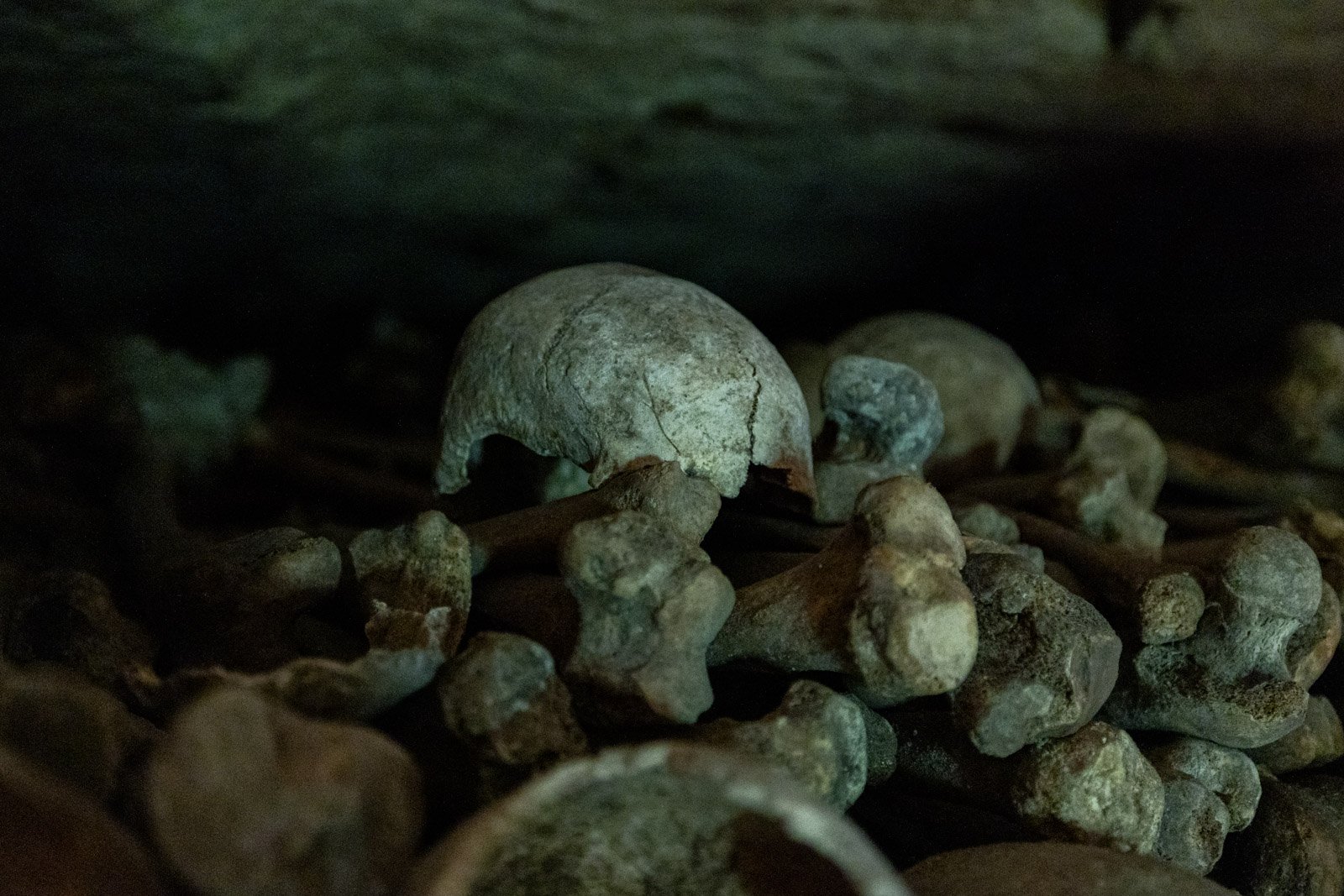
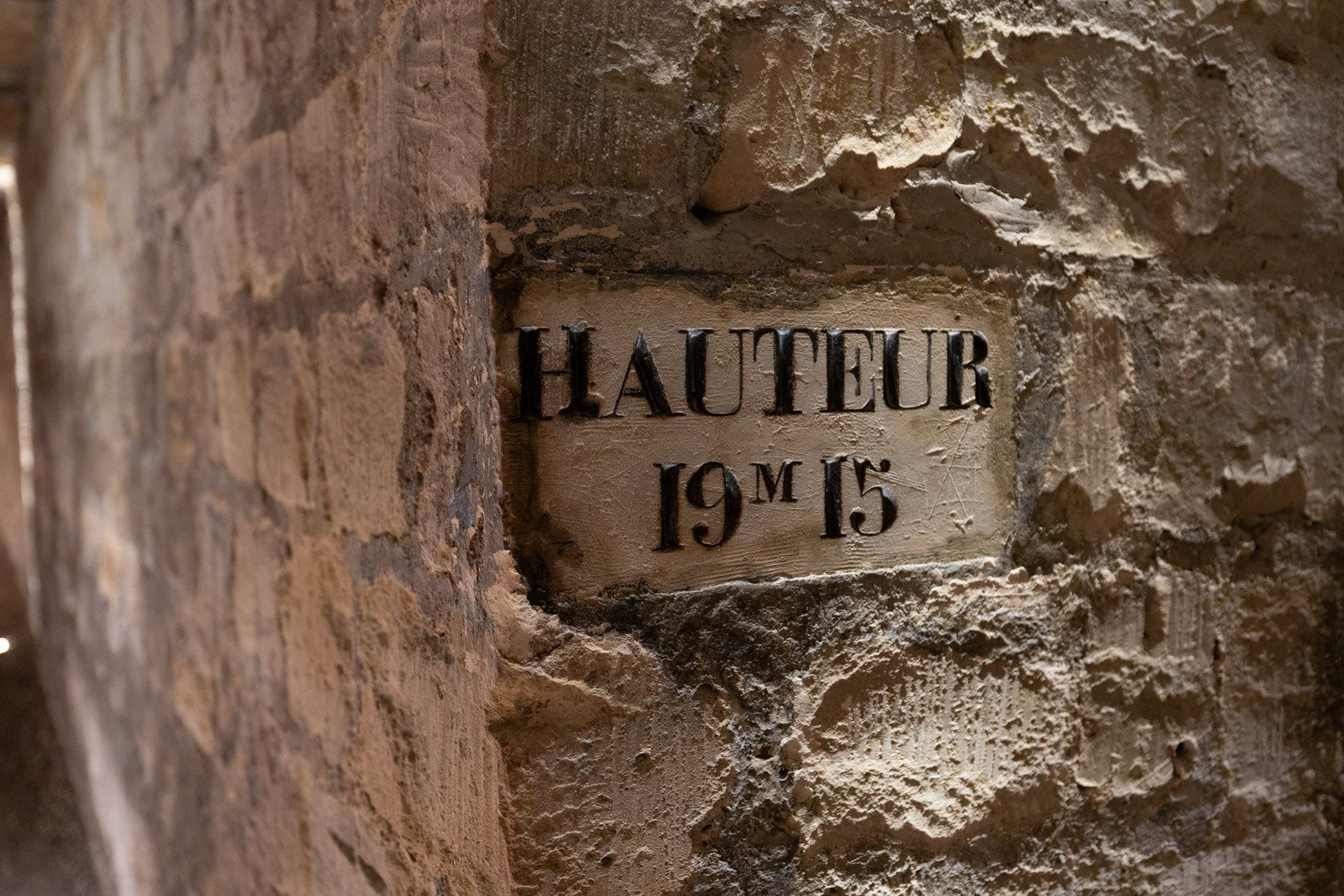
Beyond it the bones begin. Most are loose, skulls and long bones rather than whole skeletons, so the number of people represented is far higher than the number of complete bodies. Stone plaques between the stacks name the cemetery each load came from. Along the route there is a carved model of the harbour at Port Mahon, a well that shows the groundwater level, and the Crypt of the Sepulchral Lamp. The air is cold, the light is low, and the quiet is hard to describe.
The Forbidden Tunnels Beneath Paris
The ossuary is a fragment of a much larger network, roughly 280 to 300 kilometres of quarry tunnels under the city. Everything outside the public route is closed. Entering without permission has been illegal since 2 November 1955, the fine is €60, and a special police unit patrols the galleries.
People go anyway. The explorers known as cataphiles have spent decades down there, and Dazed's profile of the community shows how closely they guard their own rules. The history is layered. The French Resistance used the tunnels in World War II, the Germans built a bunker beneath a Paris school, and parties filled them in the 1990s. In 2004, police found a hidden cinema.
Photographers arrived early too. In the 1860s Nadar carried magnesium flash and battery lighting underground, and National Geographic notes that he called it a place everyone wants to see and no one wants to see again.
Please do not try to enter the quarries on your own. Beyond the fine, there are flooded galleries, collapses, hidden wells and old cabling. Licensed guided tours, some with access to areas beyond the standard route, are the legal way to see more.
Paris Catacombs Photos
If you like places where history is still visible, see more of our abandoned places in Virginia, and Arizona.
Sources
What Lies Beneath the Catacombs of Paris, Smithsonian Magazine
Beneath Paris Lies a Dark and Forbidden World of the Dead, National Geographic